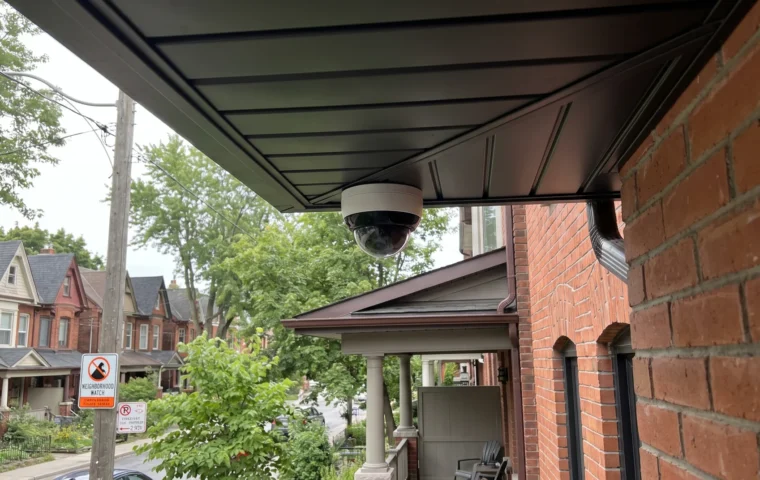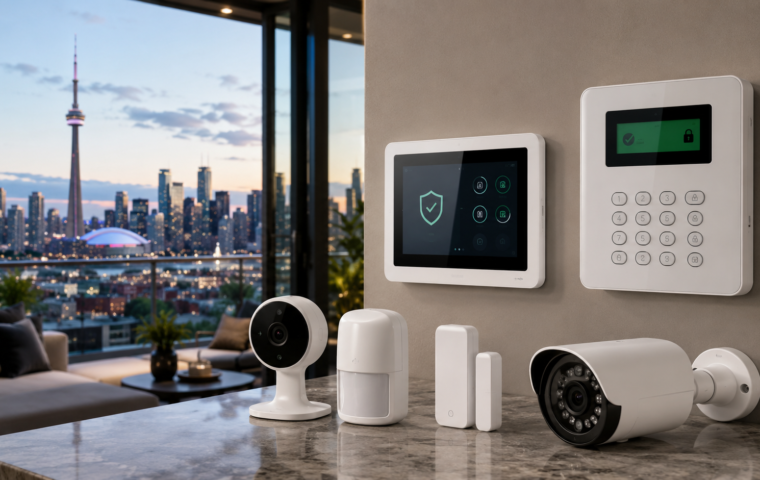

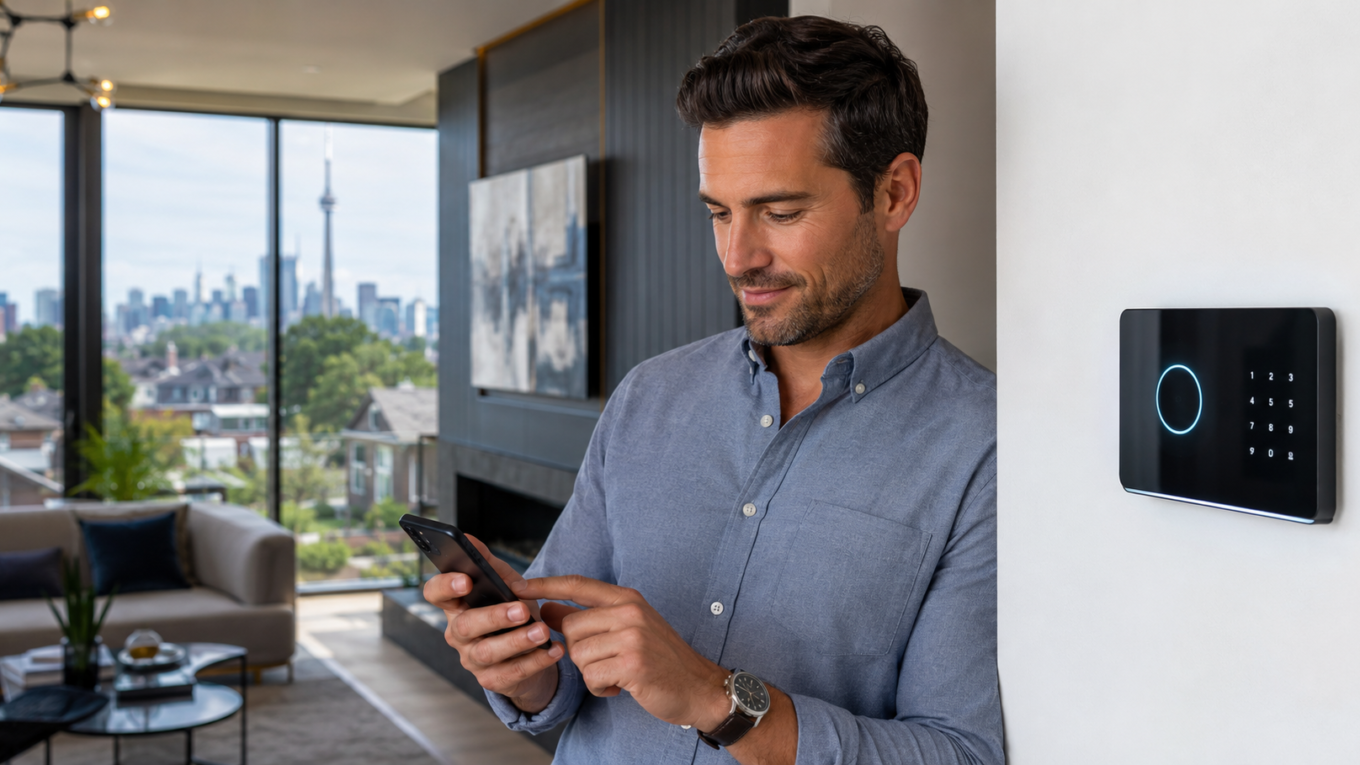
When homeowners weigh up wired vs wireless security systems, the debate is often framed as “smart” versus “traditional.” That framing is misleading. The real distinction that matters for protecting your home is between a professionally installed, wired security system and a collection of consumer-grade wireless smart devices. They are not two flavours of the same thing. One is engineered infrastructure built for reliability; the other is a set of convenience gadgets. With the Toronto Police Service recording 6,092 residential break-and-enter incidents in 2025, understanding that difference is worth getting right.
The Real Distinction: Professionally Installed vs Consumer-Grade
A professionally installed wired system is designed, specified and hard-wired into your home by trained technicians. Sensors, control panels and sirens are connected by dedicated cabling and engineered to work together as one reliable whole. Consumer-grade wireless devices, by contrast, are off-the-shelf sensors, cameras and hubs that communicate over radio and Wi-Fi, usually installed by the homeowner. The gap between them is not about brand or features. It is about how dependably the system performs when it actually matters.
Why Wired Systems Remain the Gold Standard
Across the security industry, professionally installed wired alarm systems are still considered the gold standard, and for good reasons that have nothing to do with fashion:
- Reliability. A hard-wired sensor has a physical, constant connection to the panel. There is no signal to drop, no battery in every device to die, and no radio link to lose. It simply works, consistently, year after year.
- Immunity to wireless interference. Wired sensors are not affected by the radio congestion, jamming or interference that can disrupt wireless devices in a busy home or dense neighbourhood.
- Less maintenance. With far fewer batteries and no reliance on a fluctuating home network, wired systems need less ongoing attention and are less prone to nuisance faults.
- Much harder to defeat. Wireless sensors can be jammed or interfered with; a properly installed wired system is significantly more difficult for an intruder to compromise.
- Independent of your Wi-Fi. A wired alarm keeps protecting your home whether or not your internet is up. Its core function does not depend on a stable broadband connection.
When Wireless Can Be the Right Call for an Alarm
Wired is the general standard, but it is not the only right answer for every property. For alarm systems specifically, wireless is sometimes the better option depending on the site. The layout and location of the property, the specific needs of the client, and the strength and stability of the available internet can all make a professionally specified wireless alarm the smarter choice — for example, in a building where running cable is impractical, or where the design calls for flexibility. The key is that this is a decision made by a professional based on the property, not a default. It is worth being clear on one point, though: this applies to alarms. For cameras, wired is always best, every time, for the reliability and image quality that surveillance depends on.
Where Consumer Wireless Smart Devices Fall Short
Smart devices are genuinely convenient, and that convenience is the point of them. But convenience is not the same as protection. Most consumer wireless devices depend on a strong, stable internet connection to do their job: notifications, remote access and cloud-based features all rely on your Wi-Fi and the wider internet being up and healthy. That creates real vulnerabilities.
If your internet drops, your power blips, or your Wi-Fi signal is weak in part of the property, a device that lives on that network can go quiet at exactly the wrong moment. Wireless sensors can also suffer from interference and range issues, and cloud outages on the manufacturer’s side are entirely outside your control. A system whose reliability depends on a home network is, by definition, only as dependable as that network.
The “One App for Everything” Myth
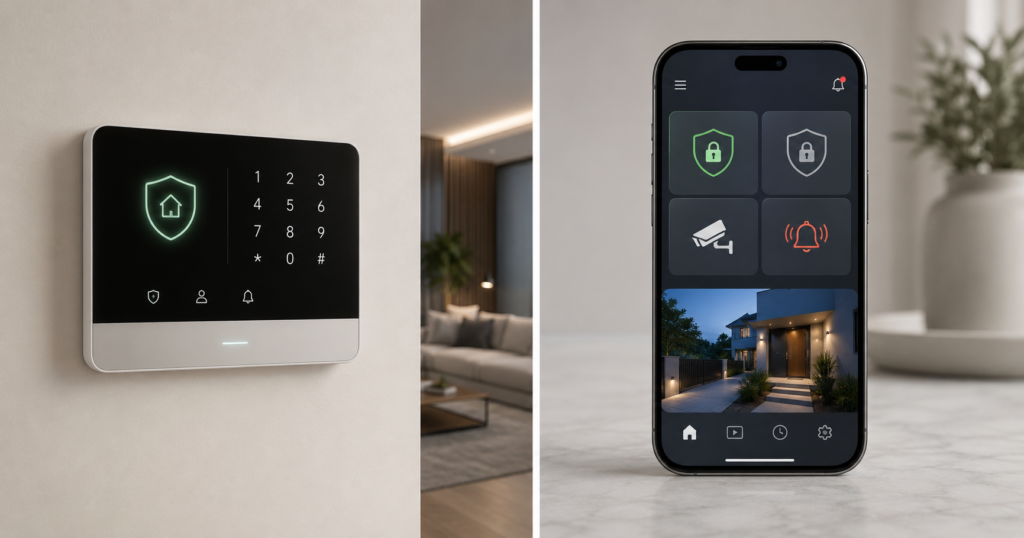
A common assumption is that a modern system means one app that controls everything. In a serious security installation, that is rarely how it works, and often it is not even desirable. Intrusion alarms, cameras, access control and home automation are frequently separate platforms, depending on the equipment selected. Many professional systems deliberately use dedicated software for each function, because purpose-built platforms are more robust and reliable than a single consumer app trying to do everything at once. When protection is the priority, separating critical functions is a strength, not a limitation.
There Is No Universal Best System: It Starts With a Risk Assessment
It is tempting to conclude that the answer is simply to combine wired and wireless and call it a day. But there is no single configuration that is right for every home. The correct system is the one designed around your property: its layout, entry points, surroundings, and the specific risks it faces. That is the job of a proper risk assessment, carried out by a professional, rather than a decision driven by which consumer features look appealing. Two homes on the same street can need genuinely different designs.
Smart Features: Enhancements, Not Replacements
None of this means smart technology has no place. Used well, smart features such as remote viewing, app notifications and automation are valuable enhancements layered on top of a dependable core. The key word is layered. They should complement a professionally installed wired foundation, not replace it. A smart camera or app is a useful addition to a reliable alarm system; it is not, on its own, a substitute for one.
So the honest answer to “wired or wireless?” is that a professionally installed wired system should be the dependable foundation of your home’s security, with smart features added where they genuinely improve day-to-day use, and the whole design shaped by a real assessment of your property’s risks.
At Iron Dome Security Solutions, we design and professionally install reliable, wired security systems across Toronto and the GTA, engineered around your property rather than off a shelf. Every system starts with a proper assessment of your home and the risks it faces. Book a professional security assessment and we will design the right protection for your property.
Crime figures cited are from the Toronto Police Service public data.