
It’s one of the first questions we get asked. And the honest answer is: it depends on your property. Every home is different — the layout, the entry points, the neighbourhood, the level of protection you actually need. That’s why we don’t publish a price list. What we can do is walk you through what drives the cost, so you go into any conversation with a security company knowing exactly what questions to ask.
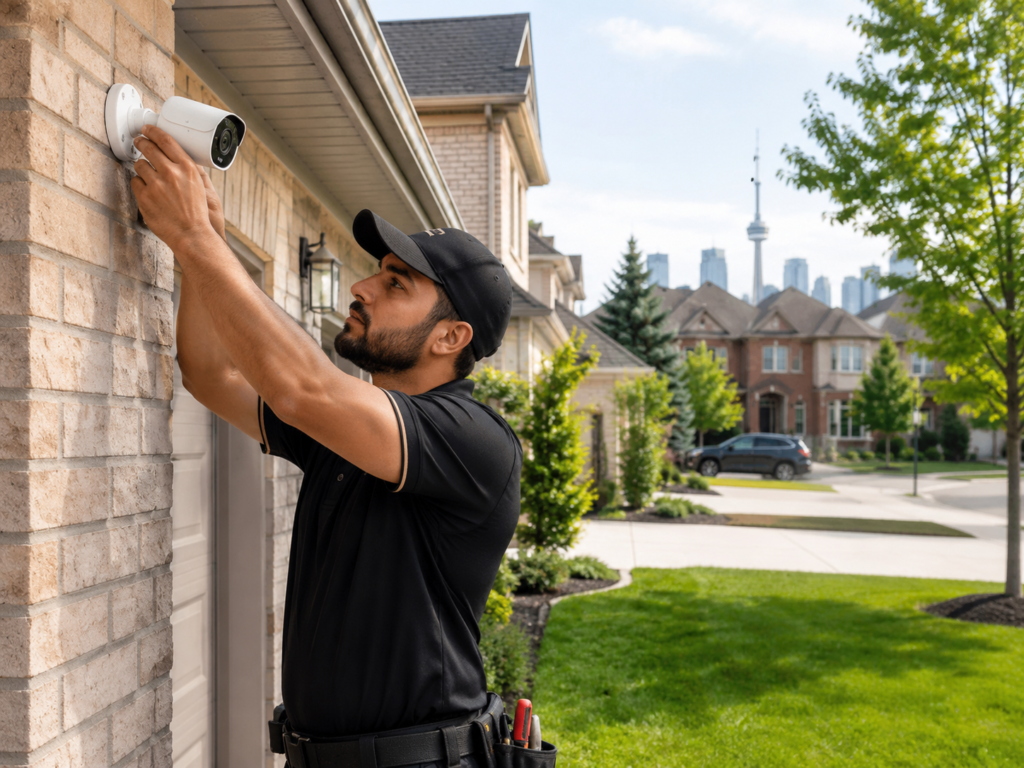
Why There’s No Standard Price for Home Security in Toronto
A basic doorbell camera and a professionally installed, monitored system with smart home integration are both technically “home security systems.” But they’re worlds apart in scope, capability, and what they actually protect you from.
The cost of any system comes down to four things: the type of system you need, the size and layout of your property, whether you want professional 24/7 monitoring, and how much smart home integration is involved. None of those variables are the same from one home to the next, which is exactly why a proper site assessment always comes before a quote. Anyone who gives you a number before walking your property is guessing.
The Factors That Drive the Cost
The Type of System
Off-the-shelf DIY kits from brands like Ring, Nest, and SimpliSafe are widely available and easy to set up yourself. They’re a reasonable starting point for low-risk properties. The problem is that they’re designed to fit every home, which means they’re optimised for none of them. They don’t account for your specific entry points, your sight lines, or how your property sits relative to the street and neighbouring properties.
A professionally specified system is designed around your home. The camera positions, sensor placement, and access control points are determined by an actual assessment of where your vulnerabilities are, not by what comes in a box.
The Size and Layout of Your Property
This is one of the biggest variables. A condo unit requires a fundamentally different solution from a detached home in Scarborough with a side entrance, a detached garage, a long driveway, and limited street visibility. The number of cameras, sensors, and coverage zones needed grows with the complexity of the property. Older homes often have more blind spots and non-standard entry points that need specific attention.
Professional Monitoring vs Self-Monitoring
A monitored system means a 24/7 professional response centre is actively watching. If your alarm triggers and you don’t respond within a set window, they call you, then your emergency contacts, then dispatch the relevant emergency services. Self-monitoring means the system alerts your phone. The difference matters significantly when you’re asleep, travelling, or simply unavailable.
According to Toronto Police Service crime statistics, a significant proportion of residential break-ins in the GTA occur when homeowners are away from the property for extended periods. Professional monitoring exists precisely for those moments when you can’t respond yourself.
Smart Home Integration
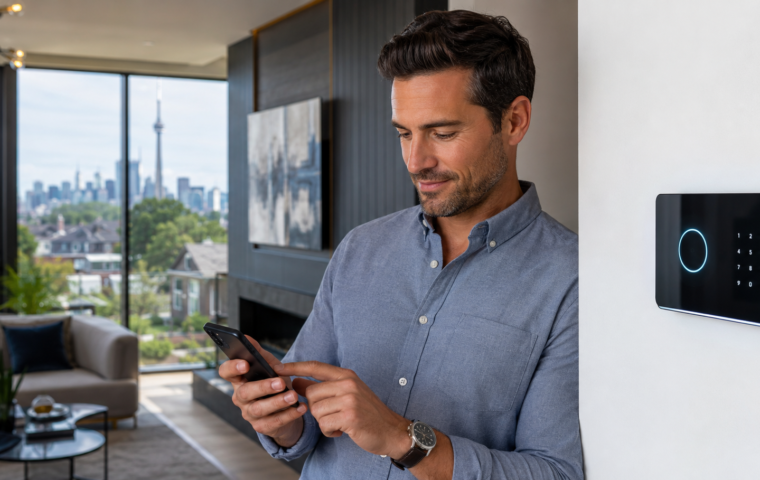
Integrating your security system with smart locks, automated lighting, and video doorbells creates a layered deterrence that standalone systems simply can’t replicate. Visible smart technology changes the calculus for opportunistic break-ins. It also gives you significantly more control over your property when you’re not there.
Smart home integration adds complexity to the installation and is not the right fit for every property. Whether it makes sense for you is one of the conversations that happens at a consultation, not before one.
Camera Placement and Sensor Coverage
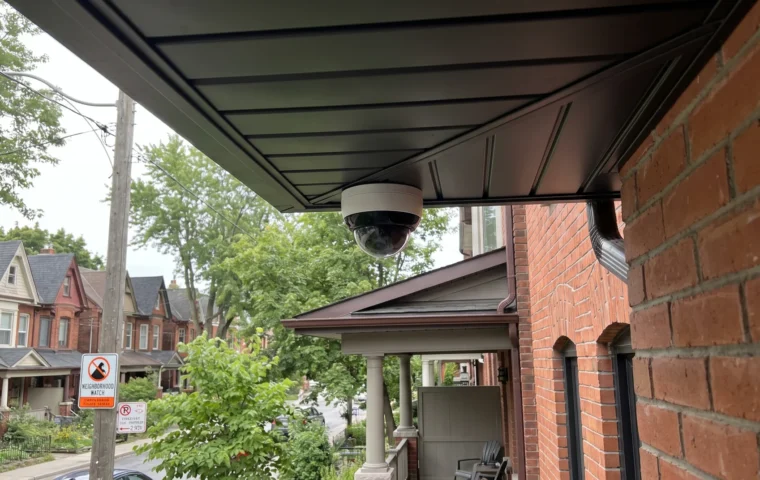
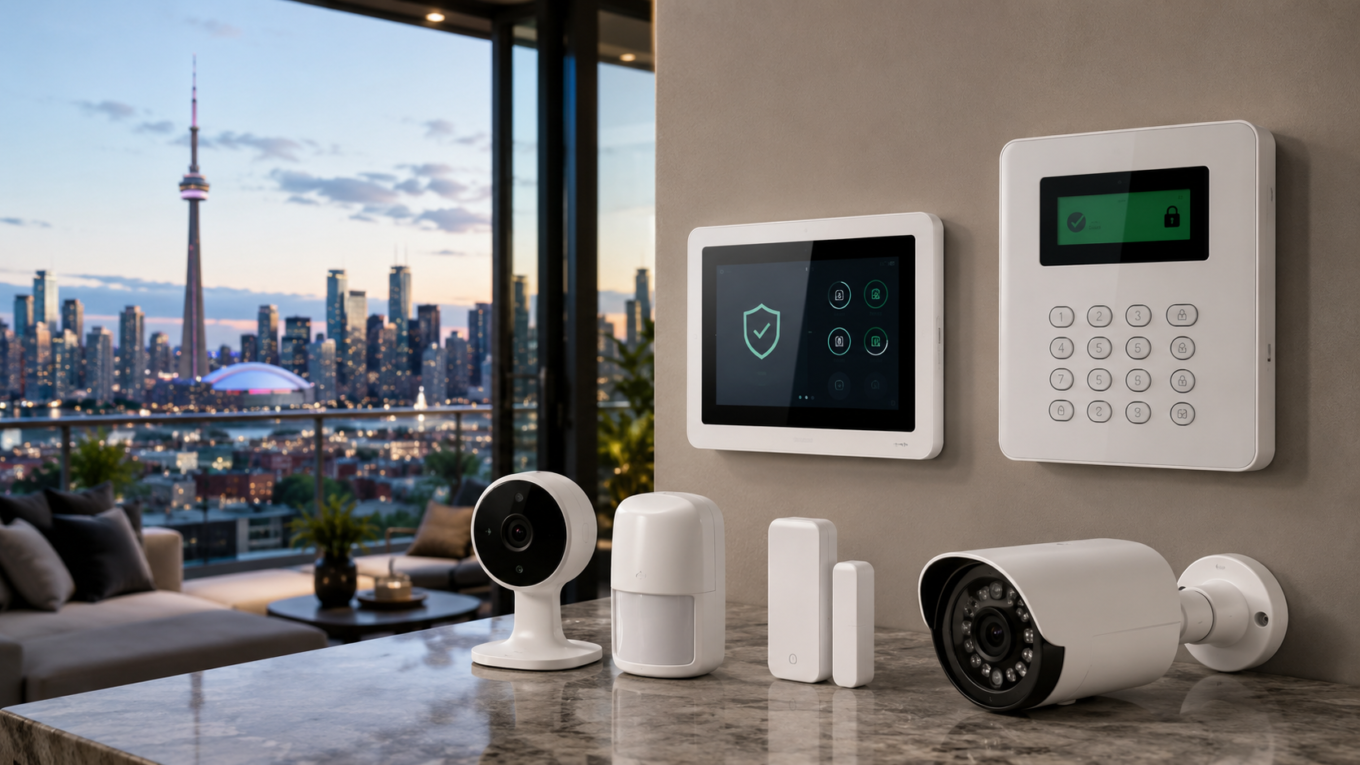
The number and placement of security cameras, motion sensors, and door and window contacts is determined by your property’s specific risk profile. More coverage isn’t automatically better — poorly placed cameras create blind spots that are worse than no camera at all because they create a false sense of security. Strategic placement based on a real assessment of your property is what makes the difference.
Video Doorbells and Access Control
Video doorbells have become one of the most effective deterrents for residential properties in Toronto. Combined with access control systems for garages, side gates, and secondary entrances, they close off the entry points that standard alarm systems often leave unaddressed. For many homeowners these additions make a significant difference to overall protection without requiring a full system overhaul.
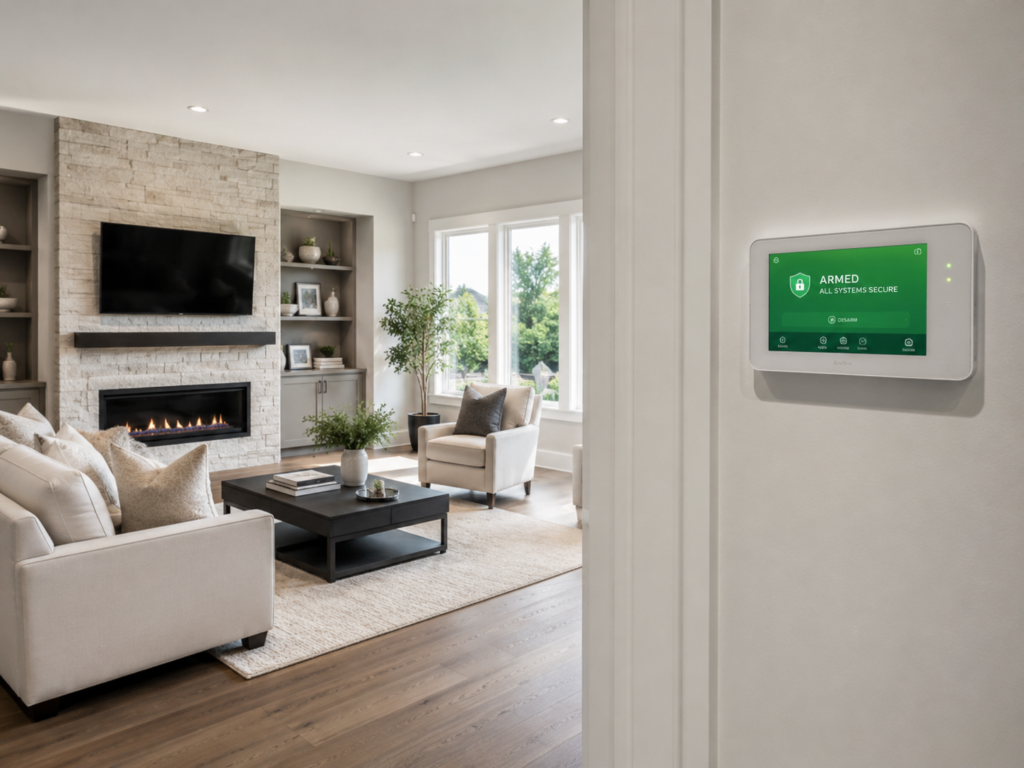
What the National Providers Don’t Tell You Upfront
TELUS SmartHome and Rogers Smart Home both advertise low or zero upfront equipment costs. What’s less prominent is the multi-year contract underneath, with monthly fees and early exit penalties that can run into hundreds of dollars. The Competition Bureau of Canada advises consumers to read the full contract terms carefully before signing any home services agreement, particularly around cancellation clauses.
Understanding exactly what you’re committing to before you sign is not a small thing. A local installer working without a long-term contract obligation gives you a fundamentally different kind of flexibility.
Things Worth Asking About Before You Commit
A few things that catch Toronto homeowners off guard regardless of which provider they choose:
- Permit requirements. Some Toronto municipalities require a permit for monitored alarm systems. The requirements vary by borough and a reputable installer will flag this before you sign anything.
- False alarm policies. The City of Toronto charges fines for repeated false alarms dispatched to emergency services. Proper installation and calibration eliminates the vast majority of this risk.
- Camera storage costs. Cloud storage for continuous video recording typically carries an ongoing monthly fee. Local storage via an on-site NVR avoids this but changes the installation scope.
- Monitoring contract terms. Know the length, the monthly cost, and the early exit terms before you commit. These vary significantly between providers.
- Equipment ownership. With some national providers, the equipment is leased rather than owned. When the contract ends or you want to switch, the equipment goes back. Ask upfront.
The Right Question Isn’t What Does It Cost — It’s What Does Your Property Need
We’ve had a lot of conversations with Toronto homeowners who start by asking about price and end by realising the better question is what their property actually needs. Those two conversations lead to very different decisions.
The cheapest system that doesn’t cover your actual entry points, doesn’t account for your layout, and leaves your most vulnerable access points unmonitored isn’t a bargain. It’s a false sense of security, which in some ways is worse than no system at all.
The right system is the one that fits your home, your lifestyle, and the specific risk profile of your area. That’s a conversation, not a price list.
We offer a free consultation where we walk your property, identify the real risk points, and give you a straight recommendation with a tailored quote. No pressure, no upselling. Just an honest answer to what your home actually needs.